
Introduction
In today’s competitive digital landscape, businesses have more opportunities than ever to reach their ideal customers online. Among the most effective advertising platforms are Meta Ads (Facebook and Instagram) and Google Ads. Both platforms help businesses generate leads, increase sales, and grow brand awareness, but they work in very different ways.
One common question business owners ask is: Which platform is better—Meta Ads or Google Ads?
The answer depends on your business goals, target audience, industry, and marketing budget. While both platforms can deliver excellent results, choosing the right one requires understanding how each platform works and what it does best.
In this guide, we’ll compare Meta Ads and Google Ads, explore their advantages and disadvantages, and help you decide which advertising platform is the right fit for your business.

What Are Meta Ads?
Meta Ads are paid advertisements displayed across Facebook, Instagram, Messenger, and the Meta Audience Network.
Unlike search-based advertising, Meta Ads focus on interest-based targeting. Instead of waiting for customers to search for your product, Meta introduces your business to people who are likely to be interested based on their demographics, interests, online behavior, and purchasing habits.
Meta Ads are ideal for:
- Brand awareness
- Lead generation
- Online stores
- Local businesses
- Event promotions
- Mobile app promotion
Because Meta owns both Facebook and Instagram, a single campaign can reach millions of users across multiple platforms.

What Are Google Ads?
Google Ads is Google’s online advertising platform that allows businesses to appear when users search for products or services.
Whenever someone searches for keywords such as “digital marketing agency near me” or “best SEO company,” Google displays relevant advertisements at the top of the search results.
Google Ads includes:
- Search Ads
- Display Ads
- Shopping Ads
- YouTube Ads
- Performance Max Campaigns
Google Ads focuses on search intent, meaning it reaches people who are already looking for a solution.
Meta Ads vs Google Ads: The Key Difference
The biggest difference between the two platforms is customer intent.
Google Ads targets users who are actively searching for products or services. These customers usually have high purchase intent and are ready to take action.
Meta Ads, on the other hand, introduce your brand to users while they browse social media. Even if they weren’t planning to buy, engaging creatives and compelling offers can capture their attention.
In simple terms:
- Google Ads captures existing demand.
- Meta Ads creates new demand.
Both strategies are valuable depending on your marketing objectives.
Audience Targeting
Meta Ads
Meta provides advanced audience targeting options based on:
- Age
- Gender
- Location
- Interests
- Behaviors
- Job titles
- Online activities
- Custom audiences
- Lookalike audiences
This makes Meta one of the best platforms for finding new customers.
Google Ads
Google primarily targets users based on:
- Search keywords
- Search intent
- Geographic location
- Device
- Language
- Audience signals
- Previous website visitors
Google excels at reaching customers who are already interested in your products or services.
Cost Comparison
Advertising costs vary depending on industry, competition, and campaign quality.
Generally:
- Meta Ads often have lower cost-per-click (CPC).
- Google Ads can have higher CPCs due to keyword competition.
- Google typically delivers higher conversion intent.
- Meta often generates lower-cost awareness and engagement.
Instead of focusing only on advertising cost, businesses should evaluate the overall return on investment (ROI).
A higher-cost click can still produce better profits if it leads to more sales.
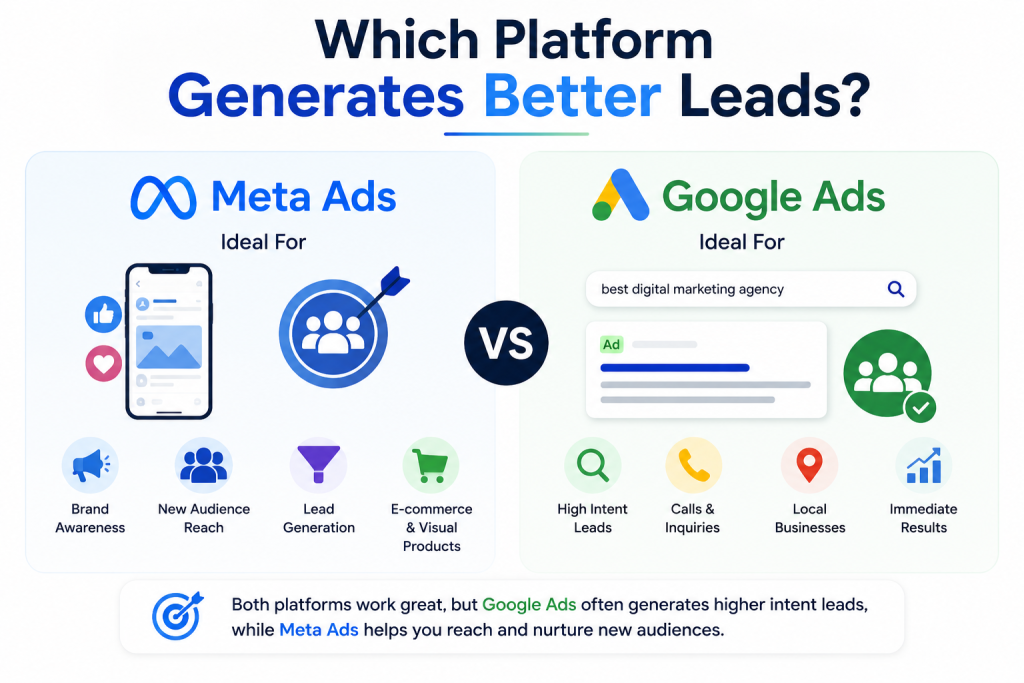
Which Platform Generates Better Leads?
The answer depends on your business.
Google Ads is ideal if you want:
- High-intent leads
- Local service inquiries
- Phone calls
- Website conversions
- Immediate sales
Examples include:
- Real estate agencies
- Digital marketing companies
- Lawyers
- Doctors
- Plumbers
- Consultants
Meta Ads performs well for:
- Fashion brands
- Beauty products
- Restaurants
- Gyms
- Online stores
- Educational courses
- Lifestyle businesses
Visual products generally perform exceptionally well on Facebook and Instagram.
Advantages of Meta Ads
Meta Ads offer several benefits:
- Advanced audience targeting
- Excellent brand awareness
- Attractive visual advertising
- Lower advertising costs
- High engagement
- Strong remarketing options
- Easy lead generation forms
Businesses looking to grow their online community often choose Meta Ads as part of their marketing strategy.
Advantages of Google Ads
Google Ads provides several powerful advantages:
- High purchase intent
- Fast lead generation
- Excellent local marketing
- Immediate visibility
- Measurable campaign performance
- Flexible budgeting
- Wide range of campaign types
Businesses that depend on customer inquiries usually see excellent results from Google Search campaigns.
Can You Use Both Together?
Absolutely.
Many successful businesses combine Meta Ads and Google Ads to create a complete digital marketing strategy.
For example:
- Meta Ads introduce your brand to new audiences.
- Interested users visit your website.
- Google Remarketing reminds visitors about your business.
- Google Search Ads capture users when they search again.
- Together, both platforms increase conversions and strengthen brand recognition.
Using both platforms creates multiple customer touchpoints throughout the buying journey.
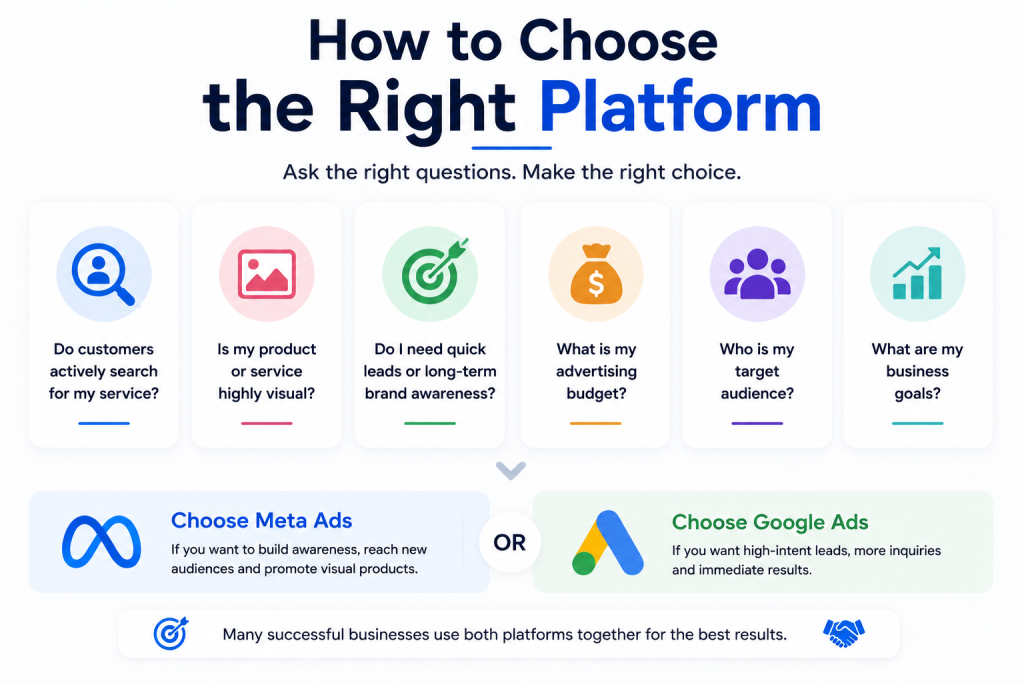
How to Choose the Right Platform
Ask yourself these questions:
- Do customers actively search for my service?
- Is my product highly visual?
- Do I need quick leads or long-term brand awareness?
- What is my advertising budget?
- Who is my target audience?
- What are my business goals?
If your goal is generating immediate inquiries, Google Ads may be the better choice.
If your objective is increasing brand awareness, social engagement, and reaching new audiences, Meta Ads is often the stronger option.
For many businesses, combining both platforms produces the best overall results.
Best Practices for Successful Advertising
Whether you choose Meta Ads or Google Ads, follow these best practices:
- Define clear marketing goals.
- Understand your target audience.
- Use compelling ad copy and visuals.
- Optimize landing pages for conversions.
- Track campaign performance regularly.
- Test different creatives and audiences.
- Monitor ROI instead of only clicks.
- Continuously optimize campaigns.
Successful advertising is not about launching one campaign—it’s about ongoing improvement based on data.
Conclusion
Both Meta Ads and Google Ads are powerful digital marketing platforms, but they serve different purposes. Google Ads excels at capturing customers who are actively searching for solutions, making it ideal for generating high-intent leads and immediate conversions. Meta Ads, on the other hand, help businesses build brand awareness, engage audiences, and create demand through visually compelling campaigns.
Rather than viewing them as competitors, think of them as complementary tools. A balanced strategy that combines the strengths of both platforms can deliver better visibility, stronger customer engagement, and higher return on investment. By aligning your advertising strategy with your business goals and continuously optimizing your campaigns, you can achieve sustainable growth and long-term success.