
Digital marketing has become one of the most powerful ways to reach the right audience, build trust, and generate consistent business growth. As technology continues to evolve, businesses that embrace modern marketing strategies will stay ahead of the competition.
This guide explains everything you need to know about digital marketing in 2026, including its benefits, key strategies, and how your business can use it to achieve long-term success.
What Is Digital Marketing?
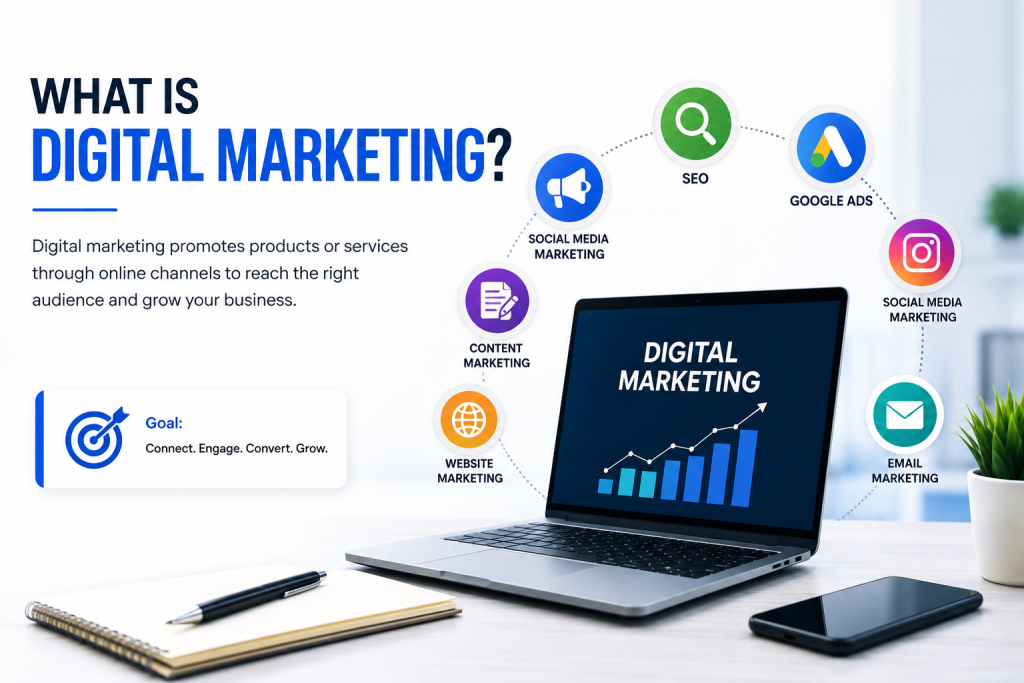
Digital marketing is the process of promoting products or services through online channels such as search engines, social media platforms, websites, email, and paid advertising.
Unlike traditional marketing, digital marketing allows businesses to reach highly targeted audiences, measure campaign performance, and optimize strategies based on real data.
Popular digital marketing channels include:
- Search Engine Optimization (SEO)
- Google Ads
- Meta Ads (Facebook & Instagram)
- Social Media Marketing
- Content Marketing
- Email Marketing
- Website Marketing
- Analytics and Performance Tracking
Together, these channels create a complete marketing strategy that helps businesses attract, convert, and retain customers.
Why Digital Marketing Matters in 2026
Consumer behavior has changed dramatically over the past few years. Before making a purchase, most people search online, read reviews, compare options, and visit company websites.
Without a strong online presence, businesses risk losing valuable customers to competitors who invest in digital marketing.
Key reasons why digital marketing is essential include:
- Increased online visibility
- Better customer targeting
- Higher quality leads
- Cost-effective advertising
- Measurable marketing performance
- Improved brand credibility
- Long-term business growth
Key Digital Marketing Strategies
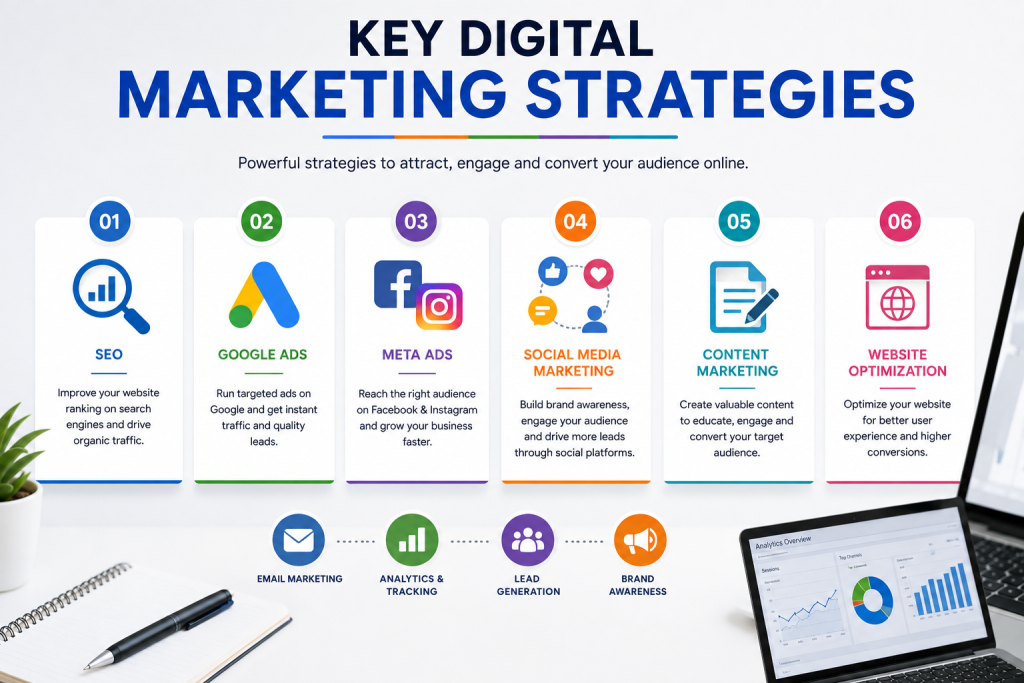
1. Search Engine Optimization (SEO)
SEO helps your website rank higher on search engines like Google.
When customers search for services related to your business, SEO increases the chances of your website appearing in search results.
Benefits include:
- More organic traffic
- Better search rankings
- Increased website authority
- Higher-quality leads
- Long-term growth without relying only on paid ads
2. Google Ads
Google Ads allows businesses to appear at the top of search results instantly.
Instead of waiting months for SEO results, Google Ads can drive qualified traffic immediately.
Businesses commonly use Google Ads to:
- Generate leads
- Increase online sales
- Promote local services
- Launch new products
- Reach customers actively searching for solutions
A well-managed Google Ads campaign can deliver excellent return on investment (ROI).
3. Meta Ads (Facebook & Instagram)
Meta Ads help businesses reach highly targeted audiences based on interests, demographics, behaviors, and online activity.
These campaigns are ideal for:
- Brand awareness
- Lead generation
- Website traffic
- Product sales
- Customer engagement
Creative visuals, compelling copy, and continuous optimization help maximize campaign performance.
4. Social Media Marketing
Social media is no longer just for entertainment—it is one of the most effective marketing channels for businesses.
Platforms like Facebook, Instagram, LinkedIn, and X enable companies to connect directly with their audience.
Consistent social media marketing helps businesses:
- Build brand awareness
- Increase customer engagement
- Generate leads
- Strengthen customer relationships
- Drive website traffic
Posting valuable content consistently builds trust over time.
5. Content Marketing
Quality content helps educate, inform, and influence potential customers.
Blogs, videos, guides, infographics, and case studies establish your business as an industry expert.
Good content also supports SEO by improving search engine visibility and attracting organic traffic.
6. Website Optimization
Your website is often the first impression customers have of your business.
A modern website should be:
- Fast-loading
- Mobile-friendly
- Easy to navigate
- Secure
- Optimized for conversions
A professional website encourages visitors to become customers.
Benefits of Digital Marketing
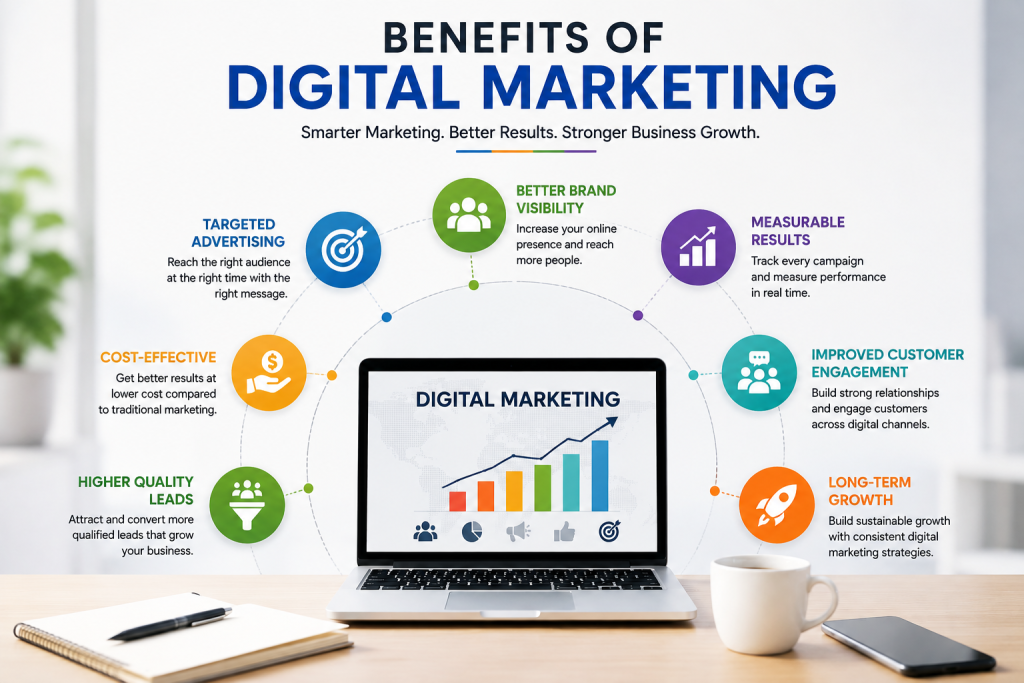
Businesses investing in digital marketing experience several advantages:
Better Brand Visibility
A strong online presence helps more customers discover your business.
Targeted Advertising
Reach people based on location, interests, age, profession, and purchasing behavior.
Cost-Effective Marketing
Compared to traditional advertising, digital marketing often delivers better results at a lower cost.
Measurable Results
Track impressions, clicks, leads, conversions, and ROI using analytics tools.
Improved Customer Engagement
Businesses can communicate directly with customers through social media, email, and messaging platforms.
Long-Term Growth
A combination of SEO, content, and paid advertising creates sustainable business growth over time.
Common Digital Marketing Mistakes
Many businesses waste their marketing budget by making avoidable mistakes.
Common issues include:
- Ignoring SEO
- Running ads without proper targeting
- Inconsistent social media posting
- Poor website design
- Not tracking campaign performance
- Publishing low-quality content
- Failing to optimize for mobile users
Avoiding these mistakes can significantly improve marketing performance.
How to Build an Effective Digital Marketing Strategy
An effective strategy begins with understanding your business goals.
A successful plan includes:
- Define your target audience.
- Build a professional website.
- Improve search engine visibility through SEO.
- Create valuable content regularly.
- Run targeted Google and Meta Ads.
- Stay active on social media.
- Monitor analytics and optimize campaigns.
- Continuously test and improve marketing efforts.
Businesses that consistently refine their strategy achieve better long-term results.
The Future of Digital Marketing
Digital marketing continues to evolve with advancements in automation, artificial intelligence, personalization, and data analytics.
Successful businesses will focus on:
- Customer experience
- High-quality content
- Mobile-first marketing
- Video marketing
- AI-assisted campaign optimization
- Data-driven decision making
Companies that adapt to these trends will remain competitive in the years ahead.
Conclusion
Digital marketing is no longer optional—it’s a fundamental part of business success. From improving search visibility with SEO to generating leads through Google Ads, Meta Ads, and social media marketing, every strategy contributes to stronger brand growth and better customer engagement.
Whether you’re a small business, startup, or established enterprise, investing in digital marketing helps you reach the right audience, generate quality leads, and achieve measurable results.
As businesses continue to compete in an increasingly digital world, those that embrace innovative marketing strategies will be better positioned for long-term success. By combining the right tools, consistent optimization, and a customer-focused approach, your business can build a powerful online presence and grow confidently in 2026 and beyond.
In today’s competitive business landscape, having a great product or service is no longer enough. Customers are searching, comparing, and making purchasing decisions online every day. Whether you’re a startup, a local business, or a well-established company, your digital presence plays a major role in attracting customers and driving revenue.
Digital marketing has become one of the most powerful ways to reach the right audience, build trust, and generate consistent business growth. As technology continues to evolve, businesses that embrace modern marketing strategies will stay ahead of the competition.