
Running a small business in today’s competitive market is more challenging than ever. Customers are no longer relying only on newspapers, flyers, or word-of-mouth recommendations to find products and services. Instead, they search online, read reviews, compare businesses, and make purchasing decisions based on what they discover on the internet.
Whether you own a retail store, restaurant, gym, salon, real estate agency, healthcare clinic, or service-based business, having a strong digital presence is essential. Digital marketing allows small businesses to compete with larger companies by reaching the right audience, generating quality leads, and building long-term customer relationships.
In this guide, we’ll explore why digital marketing is no longer optional for small businesses and how it can help you achieve sustainable growth.

What Is Digital Marketing?
Digital marketing is the process of promoting your business through online channels such as search engines, social media platforms, websites, email campaigns, and paid advertising.
Unlike traditional marketing, digital marketing allows businesses to connect with customers who are actively searching for products or services. It also provides valuable insights into customer behavior, helping businesses improve their marketing strategies over time.
Some of the most effective digital marketing channels include:
- Search Engine Optimization (SEO)
- Google Ads
- Meta Ads (Facebook & Instagram)
- Social Media Marketing
- Content Marketing
- Email Marketing
- Website Optimization
Together, these strategies help businesses increase visibility, attract customers, and drive consistent growth.
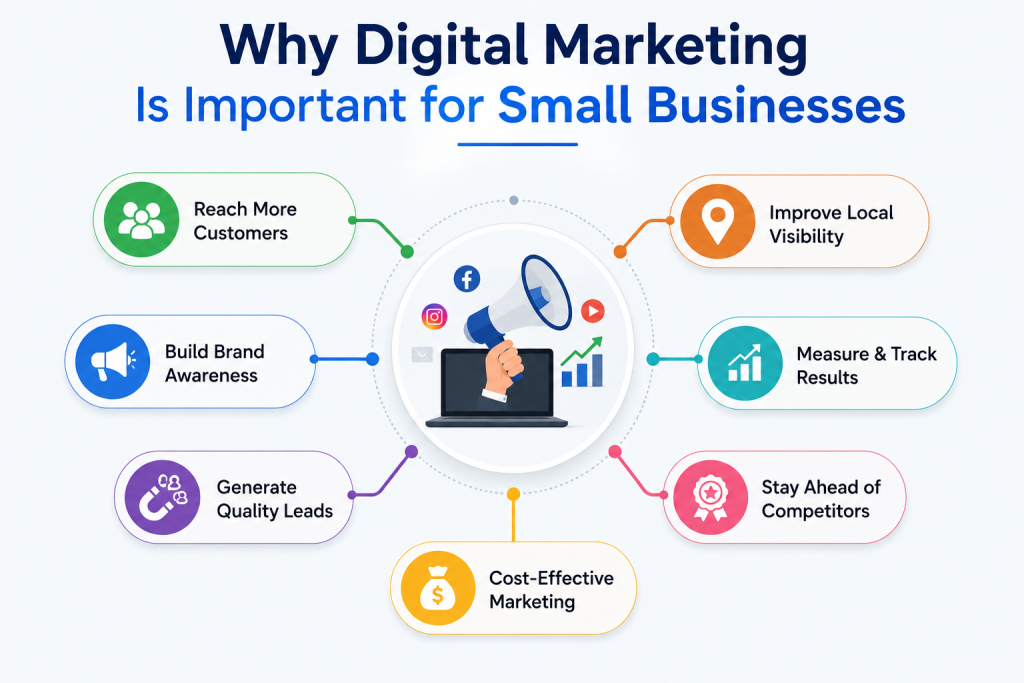
Why Digital Marketing Is Important for Small Businesses
Small businesses often have limited budgets and resources. Digital marketing provides an affordable and measurable way to compete with larger brands.
Here are some of the biggest advantages.
1. Reach More Customers Online
Most consumers begin their buying journey online. Whether they’re looking for a nearby restaurant, a trusted service provider, or a product to purchase, search engines and social media are usually the first places they visit.
A strong online presence ensures your business is visible when potential customers are searching for what you offer.
2. Build Brand Awareness
People are more likely to buy from businesses they recognize and trust.
By consistently sharing valuable content, running targeted advertisements, and maintaining active social media profiles, your brand becomes familiar to potential customers.
The more often people see your business online, the more likely they are to choose you over your competitors.
3. Generate High-Quality Leads
Digital marketing helps you reach people who are genuinely interested in your products or services.
Using tools like Google Ads, SEO, and Meta Ads, businesses can target specific audiences based on location, interests, demographics, and search intent.
This results in better-quality leads and higher conversion rates.
4. Cost-Effective Marketing
Traditional advertising methods such as newspapers, radio, and billboards often require significant investment.
Digital marketing allows businesses to start with flexible budgets and scale campaigns as they grow.
Even small marketing budgets can produce excellent results when campaigns are properly managed and optimized.
5. Improve Local Visibility
For businesses serving local customers, digital marketing is one of the most effective ways to increase visibility.
Local SEO, Google Business Profile optimization, and location-based advertising help businesses appear in local search results when customers search for nearby services.
This increases foot traffic, phone calls, and inquiries.
6. Measure Every Result
One of the biggest advantages of digital marketing is the ability to measure performance accurately.
Businesses can track:
- Website visitors
- Click-through rates
- Leads generated
- Sales conversions
- Advertising costs
- Return on Investment (ROI)
These insights help businesses make smarter marketing decisions and continuously improve campaign performance.
7. Stay Ahead of Competitors
If your competitors are investing in digital marketing and your business isn’t, you’re likely missing valuable opportunities.
Businesses with professional websites, active social media profiles, and optimized advertising campaigns attract more customers and build stronger brand recognition.
A well-planned digital marketing strategy helps you remain competitive in your industry.
Essential Digital Marketing Strategies
Every small business should consider these core strategies:
Search Engine Optimization (SEO)
Improve your website’s visibility on Google and attract organic traffic from people actively searching for your services.
Google Ads
Reach customers instantly with paid search campaigns targeting high-intent keywords.
Meta Ads
Promote your business on Facebook and Instagram using advanced audience targeting to increase engagement and generate leads.
Social Media Marketing
Build relationships with your audience by sharing valuable content, responding to customer inquiries, and increasing brand awareness.
Content Marketing
Publish informative blogs, videos, and guides that answer customer questions and establish your business as an industry expert.
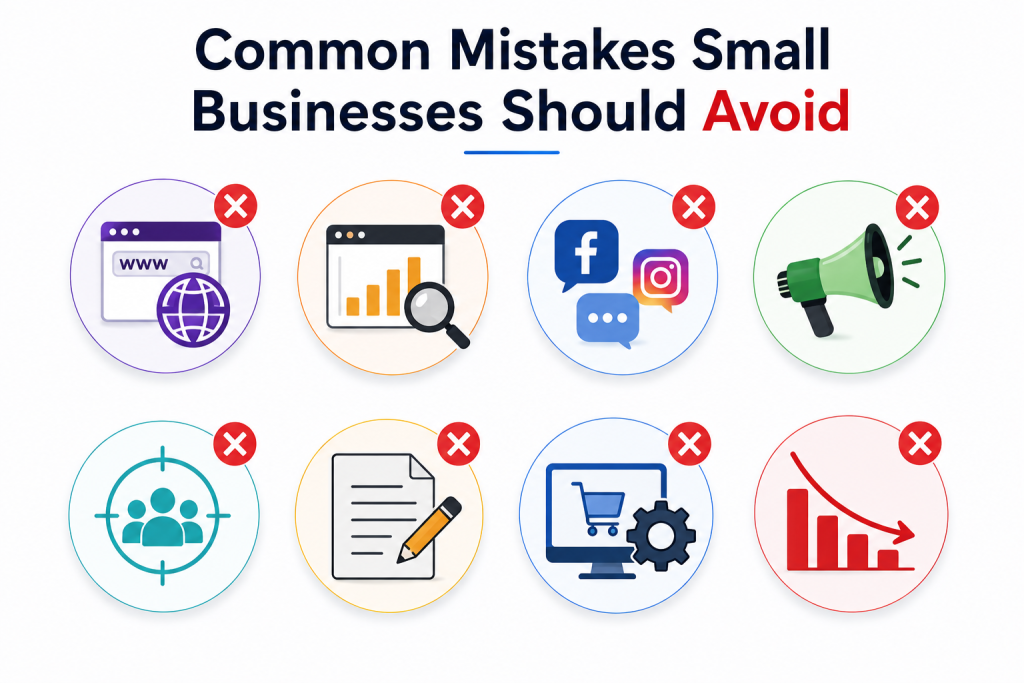
Common Mistakes Small Businesses Should Avoid
Many businesses struggle to achieve results because they make avoidable marketing mistakes.
Some of the most common include:
- Ignoring SEO
- Having an outdated website
- Posting inconsistently on social media
- Running ads without a clear strategy
- Not tracking campaign performance
- Targeting the wrong audience
- Focusing only on selling instead of providing value
Avoiding these mistakes can significantly improve marketing effectiveness.
The Future of Digital Marketing for Small Businesses
Digital marketing continues to evolve with advancements in artificial intelligence, automation, and data analytics.
Businesses that adapt to these changes will have a significant competitive advantage.
Future trends include:
- AI-powered marketing tools
- Personalized customer experiences
- Video-first content strategies
- Voice search optimization
- Advanced marketing automation
- Data-driven decision making
Staying updated with these trends helps businesses remain competitive and continue growing.
Conclusion
Digital marketing has become one of the most valuable investments a small business can make. It provides an affordable way to reach new customers, build brand awareness, generate qualified leads, and compete effectively in today’s digital marketplace.
Whether your goal is increasing website traffic, generating sales, improving customer engagement, or expanding your local presence, digital marketing offers the tools and strategies needed to achieve measurable results.
By combining SEO, Google Ads, Meta Ads, social media marketing, and valuable content, small businesses can build a strong online presence and create long-term, sustainable growth. The sooner you invest in digital marketing, the better positioned your business will be for success in an increasingly competitive world.